Bulk and Single-Cell Epigenomics Analyses using Deep Learning Frameworks
DISCOVERIES REPORTS (ISSN 2393249X), 2025, volume 8
ORIGINAL ARTICLE
ARTICLE (pdf) DOI: 10.15190/drep.2025.1
GO BACK to 2025, VOLUME 8
CITATION: Palastea EA, Bucur O. Bulk and Single-Cell Epigenomics Analyses Using Deep Learning Frameworks. Discoveries Reports 2025, 8: e44. DOI: 10.15190/drep.2025.1
Bulk and Single-Cell Epigenomics Analyses using Deep Learning Frameworks
Ema Andreea Pălăștea1,2, Octavian Bucur1,2,3, *
1 Genomics Research and Development Institute, Bucharest, Romania
2 Faculty of Medicine, Carol Davila University of Medicine and Pharmacy, Bucharest, Romania
3 Viron Molecular Medicine Institute, Boston, MA 02108, USA
*Corresponding author: Octavian Bucur, MD, PhD, Genomics Research and Development Institute, Bucharest, Romania. Email: octavian.bucur@genomica.gov.ro; octavian.bucur@gmail.com
Abstract
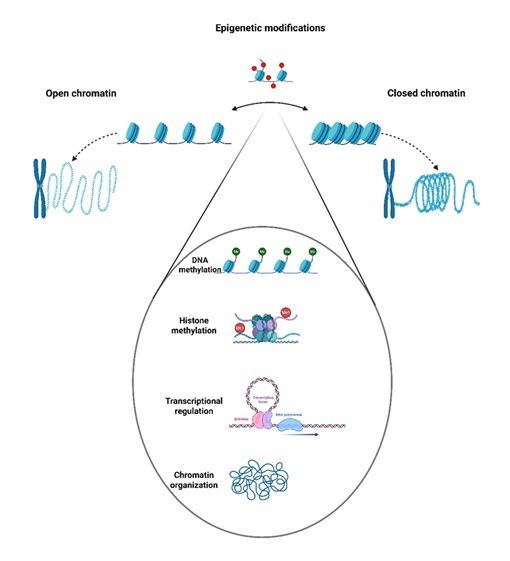
Epigenomics studies sit at the forefront of omics research. As a building block of the current knowledge on the intricate gene regulatory networks, epigenetic regulation uncovers the complexity that underlies modifications affecting gene expression without having any impact on the actual DNA sequence. Several advanced features have been demonstrated by epigenetic studies- DNA methylation, chromatin accessibility and organization, histone modifications, all contributing to a larger scale landscape that comprises higher order, often non-linear relationships between its elements. Continuous technological improvement forged a strong link between bioinformatics and omics while searching for the necessary means to investigate such complex connections. Thus, gaps previously left by the lack of suitable computational tools have been filled by artificial intelligence lately. Delving deeper into the epigenetic network, the paradigm has progressively shifted towards single-cell focused studies that promised to solve the issues regarding heterogeneous tissues. This accelerated pace of innovation propels the simultaneous development of sequencing methods that support epigenomics studies and of computational tools encompassing deep learning frameworks and quantum resources designed to perform epigenomics-related prediction tasks. Future directions of research are guided by the optimistic perspective of highly performant technological means that will drastically reduce technical noise, eliminate negative interferences, including data sparsity, batch or dropout effects, enabling an unprecedented quality of omic predictions.
Access FULL text of the manuscript here: ARTICLE (pdf) DOI: 10.15190/drep.2025.1
REFERENCES
Li Z, Gao E, Zhou J, Han W, Xu X, Gao X. Applications of deep learning in understanding gene regulation. Cell Rep Methods. 2023;3(1):100384. doi:10.1016/j.crmeth.2022.1003842.
Tahir M, Norouzi M, Khan SS, Davie JR, Yamanaka S, Ashraf A. Artificial intelligence and deep learning algorithms for epigenetic sequence analysis: A review for epigeneticists and AI experts. Comput Biol Med. 2024;183:109302. doi:10.1016/j.compbiomed.2024.1093023.
Chen G, Yu R, Chen X. Editorial: Integrative analysis of single-cell and/or bulk multi-omics sequencing data. Front Genet. 2023;13:1121999. doi:10.3389/fgene.2022.11219994.
Alharbi WS, Rashid M. A review of deep learning applications in human genomics using next-generation sequencing data. Hum Genomics. 2022;16(1):26. doi:10.1186/s40246-022-00396-x5.
Aghziel A, Mahraz MA, Tairi H, Aherrahrou N. Artificial intelligence for comprehensive DNA methylation analysis: overview, challenges, and future directions. Brief Bioinform. 2025;26(5):bbaf468. doi:10.1093/bib/bbaf4686.
Wang Y, Kong S, Zhou C, et al. A review of deep learning models for the prediction of chromatin interactions with DNA and epigenomic profiles. Brief Bioinform. 2024;26(1):bbae651. doi:10.1093/bib/bbae6517.
Schwartzman O, Tanay A. Single-cell epigenomics: techniques and emerging applications. Nat Rev Genet. 2015;16(12):716-726. doi:10.1038/nrg39808.
Ni P, Huang N, Zhang Z, et al. DeepSignal: Detecting DNA methylation state from Nanopore sequencing reads using deep-learning. Bioinformatics. 2019;35(22):4586-4595. doi:10.1093/bioinformatics/btz2769.
Stanojević D, Li Z, Bakić S, Foo R, Šikić M. Rockfish: A transformer-based model for accurate 5-methylcytosine prediction from nanopore sequencing. Nat Commun. 2024;15(1):5580. doi:10.1038/s41467-024-49847-010.
Levy JJ, Titus AJ, Petersen CL, Chen Y, Salas LA, Christensen BC. MethylNet: an automated and modular deep learning approach for DNA methylation analysis. BMC Bioinformatics. 2020;21(1):108. doi:10.1186/s12859-020-3443-811.
Zhang X, Chen J, Wang Y, et al. cfMethylPre: deep transfer learning enhances cancer detection based on circulating cell-free DNA methylation profiling. Brief Bioinform. 2025;26(3):bbaf303. doi:10.1093/bib/bbaf30312.
Cao Y, Wang D, Wu J, et al. MSI-XGNN: an explainable GNN computational framework integrating transcription- and methylation-level biomarkers for microsatellite instability detection. Brief Bioinform. 2023;24(6):bbad362. doi:10.1093/bib/bbad36213.
Xu J, Shi J, Cui X, et al. Cellular Heterogeneity–Adjusted cLonal Methylation (CHALM) improves prediction of gene expression. Nat Commun. 2021;12(1):400. doi:10.1038/s41467-020-20492-714.
Li ZP, Du Z, Huang DS, Teschendorff AE. Interpretable deep learning of single-cell and epigenetic data reveals novel molecular insights in aging. Sci Rep. 2025;15(1):5048. doi:10.1038/s41598-025-89646-115.
Ochana BL, Nudelman D, Cohen D, et al. Time is encoded by methylation changes at clustered CpG sites. Cell Rep. 2025;44(7):115958. doi:10.1016/j.celrep.2025.11595816.
Zhou J, Luo C, Liu H, et al. Deep learning imputes DNA methylation states in single cells and enhances the detection of epigenetic alterations in schizophrenia. Cell Genomics. 2025;5(3):100774. doi:10.1016/j.xgen.2025.10077417.
Deng Y, Tang J, Zhang J, Zou J, Zhu Q, Fan S. GraphCpG: imputation of single-cell methylomes based on locus-aware neighboring subgraphs. Boeva V, ed. Bioinformatics. 2023;39(9):btad533. doi:10.1093/bioinformatics/btad53318.
Zhao Q, Li Z, Mao Q, et al. MambaCpG: an accurate model for single-cell DNA methylation status imputation using mamba. Brief Bioinform. 2025;26(4):bbaf360. doi:10.1093/bib/bbaf36019.
Wang M, Tai C, Weinan E, Wei L. DeFine: deep convolutional neural networks accurately quantify intensities of transcription factor-DNA binding and facilitate evaluation of functional non-coding variants. Nucleic Acids Res. 2018;46(11):E69-E69. doi:10.1093/NAR/GKY21520.
Thibodeau A, Khetan S, Eroglu A, Tewhey R, Stitzel ML, Ucar D. CoRE-ATAC: A deep learning model for the functional classification of regulatory elements from single cell and bulk ATAC-seq data. Roy S, ed. PLOS Comput Biol. 2021;17(12):e1009670. doi:10.1371/journal.pcbi.100967021. Luo S, Zhu M, Lin L, et al. DECA: harnessing interpretable transformer model for cellular deconvolution of chromatin accessibility profile. Brief Bioinform. 2024;26(1):bbaf069. doi:10.1093/bib/bbaf06922.
Buenrostro JD, Giresi PG, Zaba LC, Chang HY, Greenleaf WJ. Transposition of native chromatin for fast and sensitive epigenomic profiling of open chromatin, DNA-binding proteins and nucleosome position. Nat Methods. 2013;10(12):1213-1218. doi:10.1038/nmeth.268823.
Wang J, Lu L, Zheng S, et al. DeCOOC Deconvoluted Hi‐C Map Characterizes the Chromatin Architecture of Cells in Physiologically Distinctive Tissues. Adv Sci. 2023;10(27):2301058. doi:10.1002/advs.20230105824.
Berson E, Sreenivas A, Phongpreecha T, et al. Whole genome deconvolution unveils Alzheimer’s resilient epigenetic signature. Nat Commun. 2023;14(1):4947. doi:10.1038/s41467-023-40611-425.
Yang Y, Pe’er D. REUNION: transcription factor binding prediction and regulatory association inference from single-cell multi-omics data. Bioinformatics. 2024;40(Supplement_1):i567-i575. doi:10.1093/bioinformatics/btae23426.
Wei G, Wang L, Liu Y, Zhang X. Cell-Type Annotation for scATAC-Seq Data by Integrating Chromatin Accessibility and Genome Sequence. Biomolecules. 2025;15(7):938. doi:10.3390/biom1507093827.
Gong Y, Srinivasan SS, Zhang R, Kessenbrock K, Zhang J. scEpiLock: A Weakly Supervised Learning Framework for cis-Regulatory Element Localization and Variant Impact Quantification for Single-Cell Epigenetic Data. Biomolecules. 2022;12(7):874. doi:10.3390/biom1207087428.
Kimura H. Histone modifications for human epigenome analysis. J Hum Genet. 2013;58(7):439-445. doi:10.1038/jhg.2013.6629. Dai SK, Liu PP, Li X, Jiao LF, Teng ZQ, Liu CM. Dynamic profiling and functional interpretation of histone lysine crotonylation and lactylation during neural development. Development. 2022;149(14):dev200049. doi:10.1242/dev.20004930.
Zhang L, Guo Q, Lei X, et al. An AI-driven multi-omics framework identifies lactylation-mediated therapeutic targets to overcome drug resistance in ovarian cancer. Npj Precis Oncol. Published online December 20, 2025. doi:10.1038/s41698-025-01150-x31. Hao Y, Hao S, Andersen-Nissen E, et al. Integrated analysis of multimodal single-cell data. Cell. 2021;184(13):3573-3587.e29. doi:10.1016/j.cell.2021.04.04832.
Chen X, Feng A, Guo H, Zeng J, Chen M. Deciphering lactate/lactylation networks in AML: integrated scRNA-seq and transcriptomics reveal functions and prognostic model. BMC Cancer. 2025;25(1):1647. doi:10.1186/s12885-025-14938-833.
Liang Y, Li M. A deep learning model for prediction of lysine crotonylation sites by fusing multi-features based on multi-head self-attention mechanism. Sci Rep. 2025;15(1):18940. doi:10.1038/s41598-025-04058-534. Li K, Zhang P, Xu J, et al. COCOA: A Framework for Fine-scale Mapping of Cell-type-specific Chromatin Compartments Using Epigenomic Information. Jin F, ed. Genomics Proteomics Bioinformatics. 2025;22(6):qzae091. doi:10.1093/gpbjnl/qzae09135.
Hu Y, Shen F, Yang X, et al. Single-cell sequencing technology applied to epigenetics for the study of tumor heterogeneity. Clin Epigenetics. 2023;15(1):161. doi:10.1186/s13148-023-01574-x36.
Xiong H, Wang R, He A. Single-cell protein-DNA interactomics and multiomics tools for deciphering genome regulation. Natl Sci Open. 2023;2(3):20220057. doi:10.1360/nso/2022005737.
Li Y, Ma L, Wu D, Chen G. Advances in bulk and single-cell multi-omics approaches for systems biology and precision medicine. Brief Bioinform. Published online March 27, 2021:bbab024. doi:10.1093/bib/bbab02438.
Wagle MM, Long S, Chen C, Liu C, Yang P. Interpretable deep learning in single-cell omics. Wren J, ed. Bioinformatics. 2024;40(6):btae374. doi:10.1093/bioinformatics/btae37439.
Nassir N, Hashmi MA, Raji KG, et al. Quantum computing and the implementation of precision medicine. Npj Genomic Med. 2025;10(1):80. doi:10.1038/s41525-025-00537-w40.
Al-E’mari S, Sanjalawe Y, Fraihat S. A Novel Quantum Epigenetic Algorithm for Adaptive Cybersecurity Threat Detection. AI. 2025;6(8):165. doi:10.3390/ai608016541.
Flöther FF, Blankenberg D, Demidik M, et al. How quantum computing can enhance biomarker discovery. Patterns. 2025;6(6):101236. doi:10.1016/j.patter.2025.10123642.
Ullah R, Sarwar N, Alatawi MN, et al. Advancing personalized diagnosis and treatment using deep learning architecture. Front Med. 2025;12:1545528. doi:10.3389/fmed.2025.1545528